Quick answer
No supplement replaces brushing, flossing, or professional cleaning, and none is proven to cure or reverse gum disease. Ranked by evidence, correcting a genuine vitamin C deficiency is the strongest nutritional move, while oral probiotics offer a modest, short-term adjunct benefit for plaque and gum bleeding. Everything else, including vitamin D, CoQ10, and calcium, has weak or observational evidence only.
- No oral supplement is proven to cure or reverse gum disease
- Vitamin C helps only when a real deficiency exists
- Oral probiotics offer modest, short-term adjunct benefit at best
Our top picks at a glance
 1
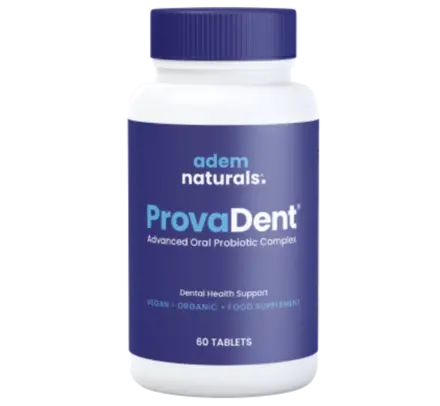
1 ProvaDent
The oral-health supplement we'd try first, if we were going to try one.
 2
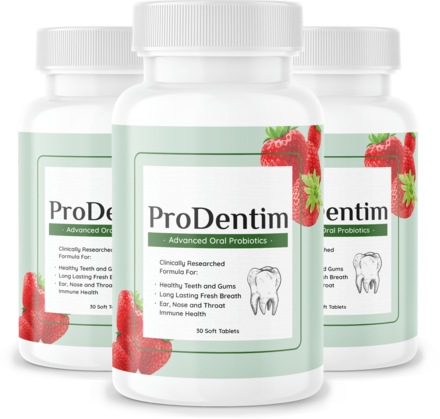
2 ProDentim
The best-known oral-probiotic chewable, and a reasonable second choice if you prefer a lozenge.
Rankings reflect formulation, value, and refund policy, not a proven cure. No supplement is proven to cure gum disease or regrow bone. Some links are affiliate links; we may earn a commission at no cost to you.
If you are looking for the best supplement for your teeth and gums, the honest starting point is that no pill replaces brushing, flossing, and professional cleaning, and no oral-health supplement has been proven in an independent trial to cure or reverse gum disease. What the evidence does support is narrower and more useful: correcting a real deficiency, and using a few ingredients as modest add-ons to good daily care.
The short answer
There is no single best supplement for teeth and gums. Ranked by evidence, the strongest case is for fixing a genuine vitamin C deficiency, which causes bleeding gums regardless of how well you brush, according to the NCBI StatPearls review on vitamin C deficiency. After that, oral probiotics show a modest, short-term benefit for plaque and gum bleeding when added to professional care, and xylitol has the most data for cavity bacteria but at low certainty. Everything else is weaker. None of these is a treatment for gum disease on its own, a point the NIDCR and the American Dental Association both make clear.
Why the question is really about ingredients, not brands
Supplements are regulated for safety, not efficacy, so a product can be sold for “gum health” without ever showing that it works. That is why the useful question is not which brand to buy, but which ingredients have evidence and whether any of them apply to you. It also explains why branded formulas sold through video sales letters, such as ProvaDent or ProDentim, do not have an independent clinical trial of the finished product: ingredient studies are not product proof.
The ingredient evidence, ranked
The table below summarizes what randomized trials and systematic reviews actually show for the ingredients most often marketed for teeth and gums.
| Ingredient | Commonly claimed to | What the evidence shows | Honest verdict |
|---|---|---|---|
| Vitamin C | Stop bleeding gums | Deficiency causes bleeding gums; correcting it helps, but mega-dosing a replete person does not | Strong for deficiency only |
| Oral probiotics (L. reuteri) | Heal gums, fight plaque | Small reduction in plaque and bleeding as an adjunct; reverts ~4 weeks after stopping | Modest, short-term |
| Xylitol | Prevent cavities | Most data, but low certainty; one low-quality dataset showed ~13% caries cut over ~3 years | Weak to modest |
| Vitamin D | Reverse gum disease | Low levels associate with periodontitis; causation not proven, RCTs lacking | Weak, observational |
| CoQ10 | Repair gum tissue | Small signal for oral dosing only in high-bias studies; topical does nothing | Weak |
| Calcium | Strengthen jawbone | Adequate intake supports bone; supplementing beyond adequacy poorly supported | Weak association |
The pattern is consistent. The ingredient with the clearest signal, vitamin C, only helps people who are actually low, and the rest range from modest to weak.
Vitamin C: the one strong play, if you are deficient
Vitamin C is the clearest case in oral nutrition. A genuine deficiency causes the gums to bleed regardless of hygiene, and correcting the deficiency resolves it, per the NCBI review. The catch is that this benefit applies to people who are low. Taking large doses when your levels are already adequate has not been shown to add anything. If your gums bleed, the higher-value step is to look at why, which our note on what vitamin deficiency causes bleeding gums covers, and to rule out the far more common cause, plaque.
Oral probiotics: a modest adjunct, not a cure
Oral probiotics are the most interesting category because they have real, if small, signal. A pooled analysis in PubMed Central found a statistically significant reduction in plaque index and in bleeding on probing, while the effect on pocket depth was not significant, and the authors described the overall clinical relevance as uncertain. Importantly, the benefit reverts roughly four weeks after you stop taking them, and every study uses them as an add-on to professional cleaning, never as a replacement. We go deeper in do oral probiotics work for gum health.
Xylitol, vitamin D, CoQ10, and calcium
Xylitol has the largest body of data for reducing cavity-causing bacteria, but the Cochrane review rates the certainty as low, so “proven to prevent cavities” overstates it. Vitamin D shows only an observational association with periodontitis, with the randomized trials needed to prove cause still missing. CoQ10 has a small signal for oral dosing in high-bias studies, and topical CoQ10 does nothing. Calcium supports bone when intake is adequate, but supplementing beyond adequacy is poorly supported.
How to choose, if you decide to try one
If you want to try a supplement anyway, which is a reasonable personal choice when it is informed, a few rules keep you safe. Get tested before assuming you are deficient in vitamin C or D. Avoid any product that claims to cure gum disease, reverse periodontitis, or regrow gums, because those claims are false. Prefer a formula with a genuine money-back guarantee so a trial costs nothing if it does not help. And keep brushing, flossing, and seeing your dentist, because that is what actually manages gum disease.
Bottom line
The best supplement for teeth and gums, judged by evidence, is whichever one corrects a deficiency you actually have, and for most people that is none. Oral probiotics and xylitol offer modest, short-term help as add-ons, not cures. If your gums bleed or you are worried about gum disease, the highest-value step is professional care, not a pill. For the branded products, read our honest reviews of ProvaDent, ProDentim, and Steel Bite Pro before you buy.
Related notes
The bottom line
No supplement is proven to cure gum disease or regrow bone. We highlight ProvaDent for its formulation and guarantee, not as a cure. If you decide to try one, ProvaDent is the option we would pick, mainly because the 60-day money-back guarantee makes a trial risk-free.
Check Latest Price for ProvaDentFrequently asked questions
What is the best supplement for teeth and gums?
There is no single best supplement, because no oral-health supplement has been shown in an independent trial of the finished product to outperform good brushing, flossing, and professional cleaning. Judged by ingredient evidence, the strongest move is correcting a genuine deficiency: low vitamin C causes bleeding gums regardless of hygiene, and correcting it helps. Oral probiotics with strains such as L. reuteri show a modest, short-term reduction in plaque and gum bleeding when used alongside professional care, but the effect is small and reverts about four weeks after stopping.
Can supplements reverse gum disease or regrow gums?
No. Periodontal bone and gum-tissue loss is not reversed by a pill, and any product claiming to cure gum disease, reverse periodontitis, or regrow teeth is making a physiologically false claim. Supplements are studied only as add-ons to scaling and root planing, never as replacements. The treatments that genuinely manage gum disease are professional cleaning, daily plaque removal, and, in advanced cases, periodontal therapy from a dentist.
Do oral probiotics actually work for gum health?
The evidence is modest and low-grade. A pooled analysis found oral probiotics produced a small but statistically significant reduction in plaque index and bleeding on probing, while the effect on pocket depth was not significant, and the authors called the clinical relevance uncertain. Benefits also revert roughly four weeks after stopping. They may be a reasonable adjunct for some people, but they are not a substitute for cleaning.
Should I take vitamin C or vitamin D for my gums?
Vitamin C has the clearest link: a true deficiency causes bleeding gums, and correcting it resolves them, but mega-dosing someone who already has enough does not add benefit. Vitamin D has only weak, observational evidence: lower levels are associated with periodontitis, but randomized trials proving that supplementing helps are lacking. Test for deficiency rather than assuming you need either one.
Sources & references
Every claim above is drawn from these primary sources.
- ● Vitamin C Deficiency (Scurvy) - StatPearls / NCBI Bookshelf · National Center for Biotechnology Information
- ● Effect of probiotics on periodontal health - systematic review and meta-analysis · PubMed Central (NIH)
- ● Xylitol-containing products for preventing dental caries - Cochrane Review · Cochrane Library
- ● Nutrition and Oral Health · American Dental Association
- ● Gum Disease (Periodontal Disease) · National Institute of Dental and Craniofacial Research
Free checklist
The 12 checks to run on a gum supplement label before you pay for it.
A one-page checklist drawn from ADA, Cochrane Oral Health and NIH/NIDCR guidance, plus the FTC's own rules on supplement advertising. It tells you which label claims mean something, which are decoration, and the wording that signals a product is not worth your money. We send it immediately, then one short note a week.
One click to unsubscribe. We never sell or share your address. Privacy.